SCAT
Adult wolves typically have 42 teeth-10 more teeth than most adult humans.
Join us every Friday for an exhilarating exploration of wolf facts and trivia on our Facebook and Instagram pages. Test your knowledge and uncover fascinating facts. The answers are posted here each week and are just a hover away—flip the card and reveal the answers.
Wolves have a good sense of smell—about 100 times greater than humans. They use this sense for communication in a variety of ways. Wolves mark their territories with urine and scats, a behavior called scent–marking. When wolves outside the pack smell these scents, they know an area is already occupied. Pack members can likely recognize the identity of a packmate by its urine, which is useful when entering a new territory or when pack members become separated. Dominant animals may scent mark through urination every two minutes.
Wolf packs are families. The dominant pair is the parents of the other members of the pack. Once their offspring reach sexual maturity (around 2-3 years old) they usually will disperse. When a wolf disperses, it seeks a mate and new territory, where it starts a new pack and becomes the dominant pair with its mate.
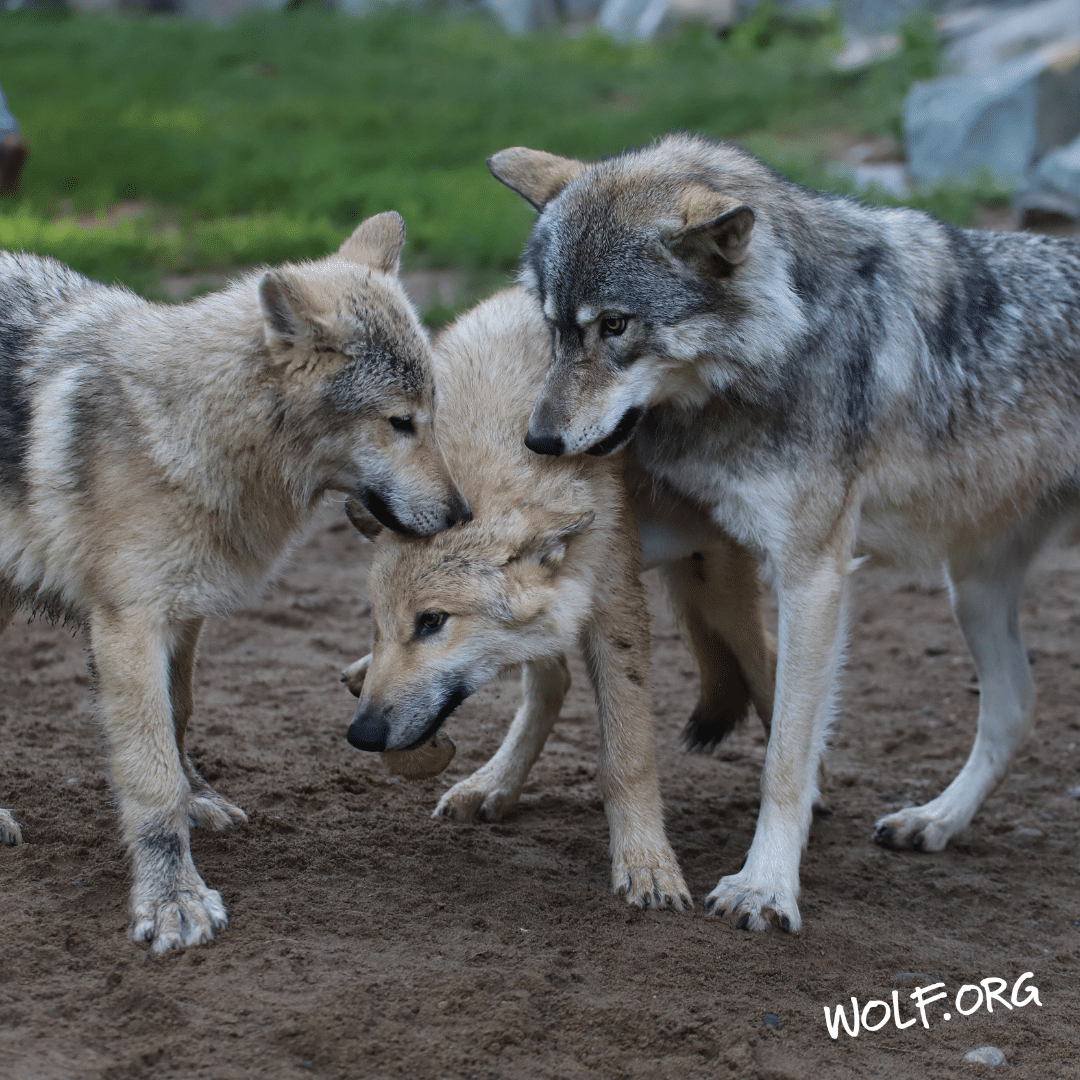
Researchers have found that play can have many important functions for wolf pups. It may help develop their muscles and endurance, allow them to practice using their hunting instincts, and reinforce social bonds between pack members.
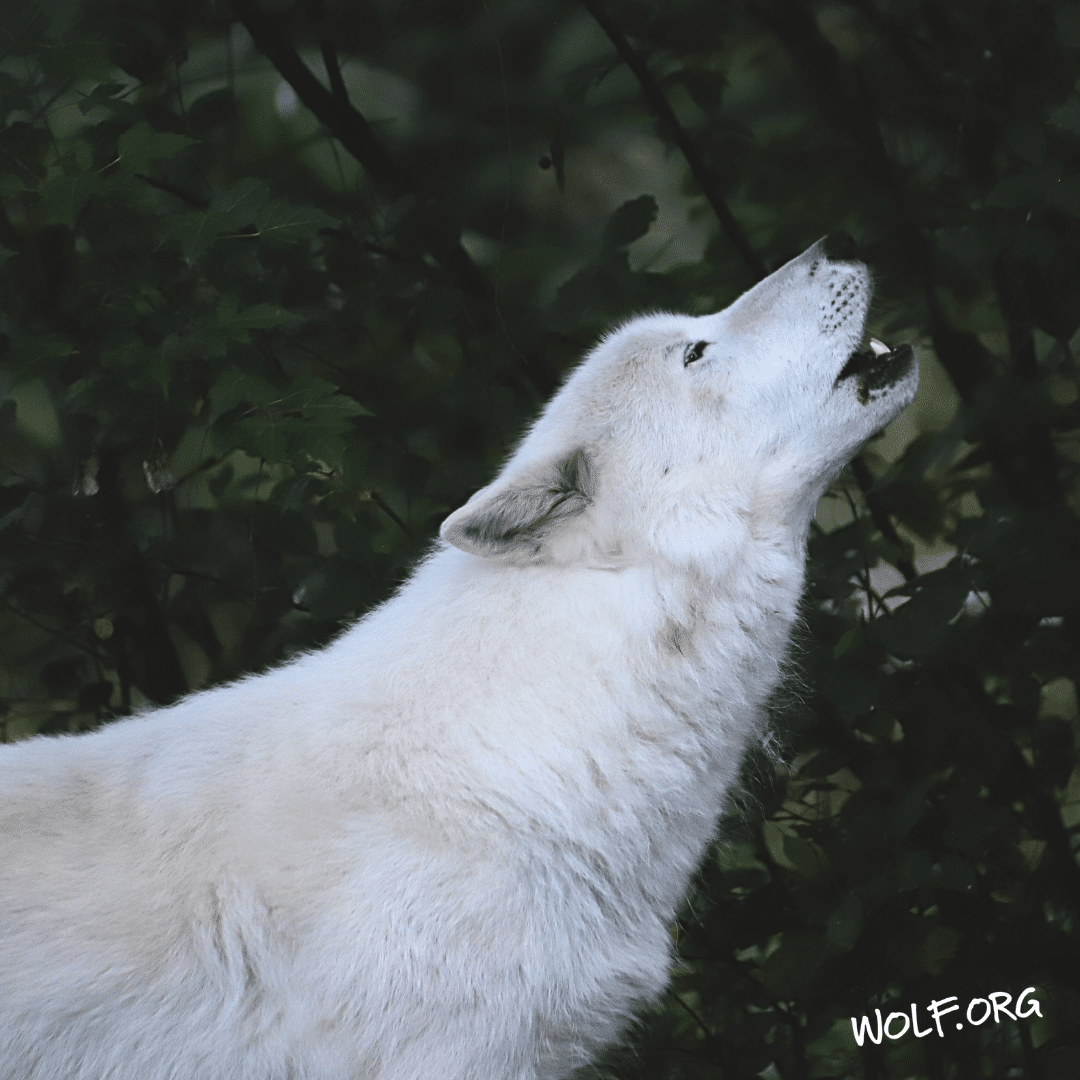
Howling is the one form of communication used by wolves that is intended for long distances. A defensive howl is used to keep the pack together and strangers away, to stand their ground and protect young pups who cannot yet travel from danger, and to protect kill sites. A social howl is used to locate one another, rally together, and possibly just for fun.
Female wolves typically weigh between 60 and 80 pounds, while males weigh between 70 and 110 pounds. Average weights vary greatly by region; for example, wolves in northern regions are often heavier than those in southern regions. Wolves also exhibit sexual dimorphism; males and females have physical differences, with females usually being slightly smaller than males in both size and weight.
The type of food a wolf eats can change depending on the season. For example, in Alaska, salmon can make up about 10% of a wolf’s diet during the spring and late summer during salmon "runs". Additionally, in Minnesota, wolves have been observed foraging for blueberries during the summertime, when the berries are readily available, and prey is more difficult to hunt.
Harsher winter conditions, accompanied by deeper snow, make it harder for prey such as deer to find food and travel. Since wolves are well-adapted to winter temperatures and traveling in snow, they have the advantage. Deer weakened by starvation and slowed down by deep snow are easier prey for wolves.
Wolf packs may travel together as a group or separately within their territory. Typically, packs are more likely to travel individually or in small groups during the spring and summer months, while gathering food for their pups at a den site. In the winter, packs are more likely to travel through the territory as a group searching for prey, but may still spend periods on their own.
The pack leaders are the dominant male and female, typically the parents of the other wolves. They share roles such as caring for pups, hunting, and defending territory. Males often focus on acquiring food and territory defense, while females concentrate on pup care and pack relationships, influenced by individual wolf personalities.
Wolves are extraordinary hunters, utilizing their exceptional senses to track prey with precision. Their keen sense of smell allows them to detect scents from over 1.5 miles away, while their sharp eyesight enables them to see well in low light. This combination of senses aids in stealthy stalking, making wolves highly effective ambush predators in their natural habitats.
Dispersal allows wolves to expand into new territories and maintain genetic diversity. Typically occurring between 1 to 2 years old, they can travel 50 to 100 miles from their birth pack. At any time, about 5 to 20 percent of the population may be dispersing to find mates, establish territories, or join new packs.
Arctic gray wolves have special adaptations that help them thrive in cold environments. Unlike other animals, their blood vessels do not restrict blood flow to their paws in low temperatures. Instead, blood flow actually increases to their paws, warming them up. This adaptation allows them to walk on frozen surfaces without suffering from paw injuries.
Wolf scat can vary from a sticky black puddle when a wolf has recently eaten a lot of meat to chalky white segments when they‘ve gone many days without a meal. It may contain bones, hair, feathers, scales, or berries depending on what’s been eaten.
Before Europeans arrived, wolves existed in one continuous population from the far north through Central America. Put differently, wolves are native to every state in what is now the United States except for Hawaii.
Nineteen wolves were relocated to Isle Royale from the mainland Great Lakes region between 2018 and 2019. This has led to the formation of several packs and a self-sustaining wolf population of about 30 wolves as of 2024.
People in Minnesota or Wisconsin did not reintroduce wolves. Despite extensive trapping and hunting after European colonization, wolves were never completely extirpated from northern Minnesota. Wolves from Minnesota and Canada naturally recolonized other areas in the Great Lakes region.
Coyotes and wolves use a variety of tail positions to communicate with other members of their species. It can be very difficult to differentiate between wolves and coyotes by sight alone.
Placing captive-born wolf pups in wild dens can help increase genetic diversity in highly endangered wolf populations. Pups raised by wild parents tend to be more successful than adult wolves born into captivity and released later in life. This process has been used with red wolf populations in North Carolina and Mexican gray wolves in Arizona and New Mexico.
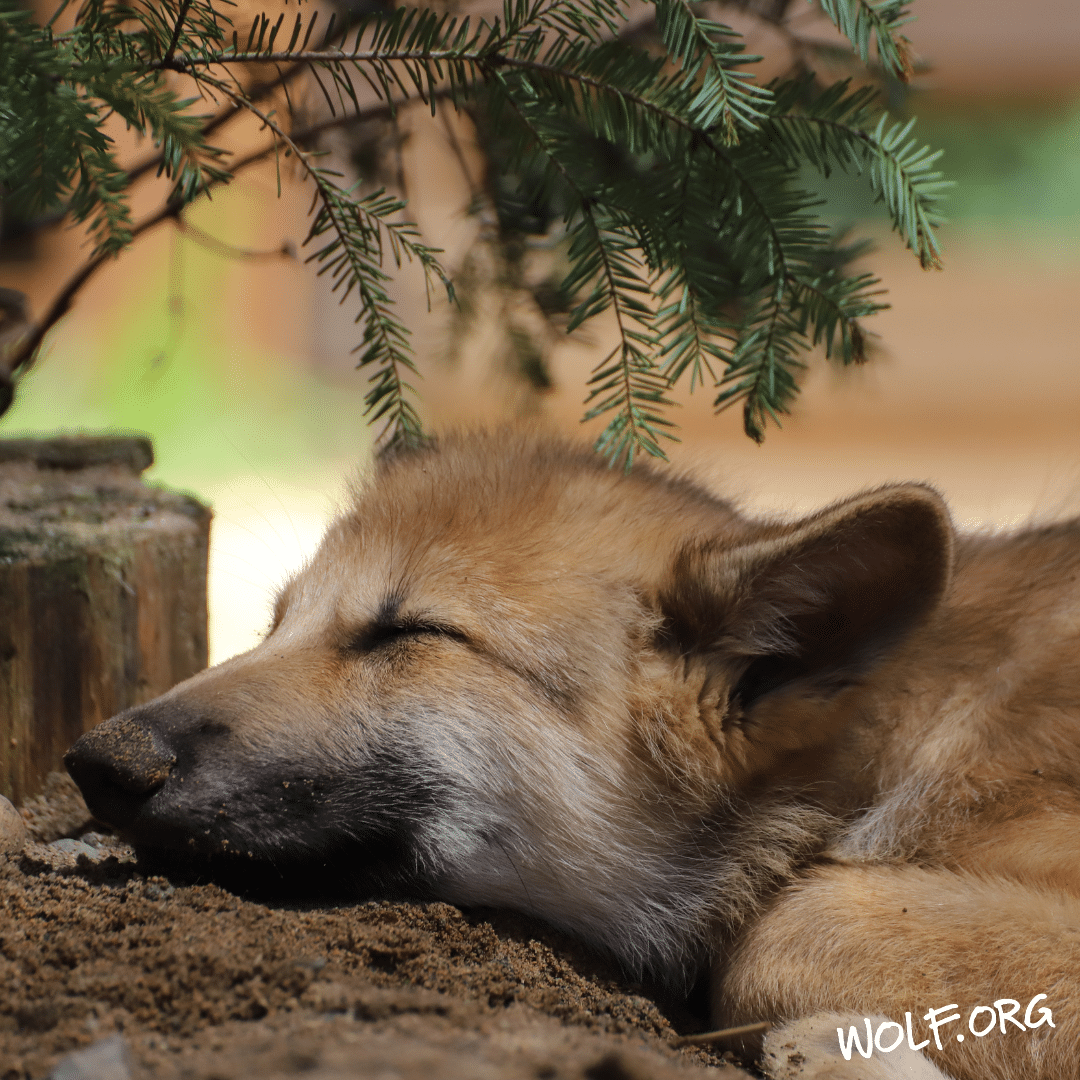
The International Wolf Center’s dedicated wolf care team takes round-the-clock shifts to ensure that someone is always monitoring our pups and addressing their needs. Sometimes, this even includes sleeping alongside pups outside or in their "den" area.
Having adult dogs around our wolf pups helps the pups to get used to interacting with a larger canine before they join our adult pack. It can also help pups to be calmer around humans and more trusting of our staff, as they can learn from a dog’s example.
While wolves‘ skeletal growth is complete at about one year old, they don’t usually reach sexual and behavioral maturity until later. Wolves that are a year old are often referred to as "yearlings" or "juveniles".
Genetic research on gray wolves in North America indicates that some early Indigenous dogs bred with wolves between 1,598 and 7,248 years ago. This resulted in the black coat color phase in the gray wolf population today.
Food possession behavior is not automatically related to a wolf‘s social rank within the pack. More confident wolves may be more successful in defending their food from others, but it’s acceptable for any wolf to protect the food they’re eating. Sometimes, if the carcass is large enough, the entire pack will eat together at once.
Based on Isle Royale National Park observations, moose that choose not to run from wolves have a better chance of survival. This may be because running triggers a heightened predatory response in wolves, because weaker and more vulnerable animals are more likely to run, or due to another unknown factor, like the individual’s personality.
Wolves may engage in a behavior called "surplus killing" where they kill more than they can eat at one time when prey is especially vulnerable, but this does not mean they kill for sport. If the carcasses are left alone, wolves will revisit the area for weeks afterwards to take advantage of leftover food.
Deer hunter success in Minnesota has decreased slightly in recent years (from 33.8% in 2021 to 32% in 2023) despite no significant change in the wolf population. Research indicates that severe winters have a larger impact on deer populations in northern Minnesota than predation from wolves. The number of deer hunters in Minnesota has also been decreasing steadily, leading to a smaller number of deer harvested. This does not mean that hunters are less successful.
The Red Wolf and the Gray Wolf are the only two universally recognized separate wolf species in the world today. With the use of molecular genetics, some researchers have concluded that there may be more separate species of wolf, but this requires more research to be widely accepted.
Pup survival is directly related to prey availability. Prey availability is generally higher in areas being newly colonized by wolves, where wolves have been recently reintroduced, or where adult wolves are harvested.

Pup survival rates are primarily dependent on parenting of the dominant pair.
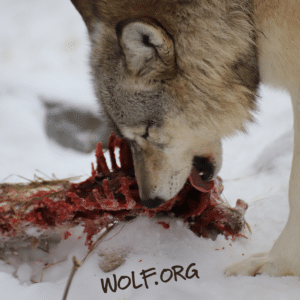
Wolves consume a variety of prey, primarily ungulates like deer and moose. However, they also eat beaver, berries, and occasionally fish. The availability of prey directly influences the wolves’ diet.

Wolves only eat ungulates.
Although wolves can sprint faster and can reach up to 38 miles per hour, typically, they will travel around 5 mph.

Wolves travel at an average speed of 5 mph.
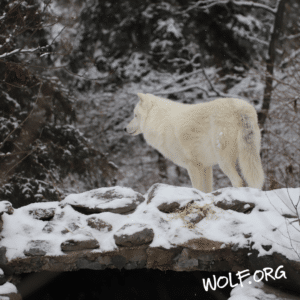
Dens are made from what is available in the territory. Most importantly, they are hidden and can fit the pups and members of the pack.

Dens can be in a hillside, under a tree, in a cave-like rock structure, or in a hollow fallen log, depending on the landscape and resources available.
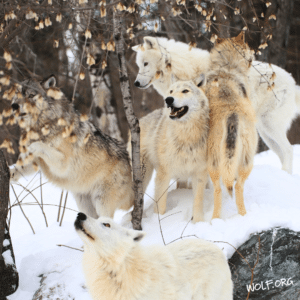
A territory is a pack‘s wild space to find resources like food, water, and shelter. The size of a pack’s territory can vary depending on prey density or how much food wolves can find in that area. The pack’s territory might be smaller in an area of high prey density (plenty of prey animals in a certain area). In areas of low prey density (like the Arctic, where prey animals such as musk ox spread out over a large expanse), wolves must travel farther to find their next meal; their territory might be much larger. Pack size can also have an influence on territory size as well. However, the main factor is prey density.

The size of a wolf pack’s territory is determined primarily by prey density.
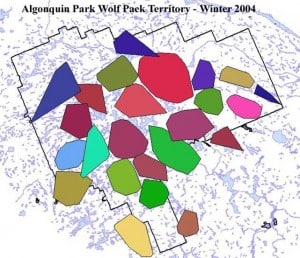
Maintaining a territory gives wolf packs exclusive (of other packs) access to prey. However, maintaining it, in other words, defending it, can be costly. To balance the cost and benefits, wolves choose the smallest suitable territory possible with enough prey for the pack to survive.

Wolves choose the smallest suitable territory possible.
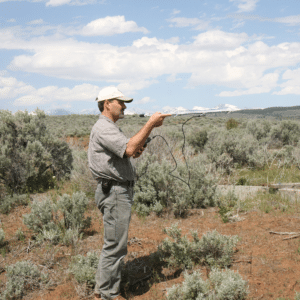
Wolf biologists monitor wolves using radio collars that connect to a special antenna, GPS collars that send data to a computer, camera traps, and traditional survey methods of tracking paw prints, kill sites, and scat. Tracking wolves can be challenging in the spring, summer, and fall when vegetation is dense and camouflages well in their environment. This is why wolf research has primarily been done in the winter; however, technological advancements have made it easier to track wolves year-round.

Wolf biologists use several methods to track wild wolves, such as GPS, radio telemetry, camera trapping, and traditional tracking (paw prints, scat, etc).
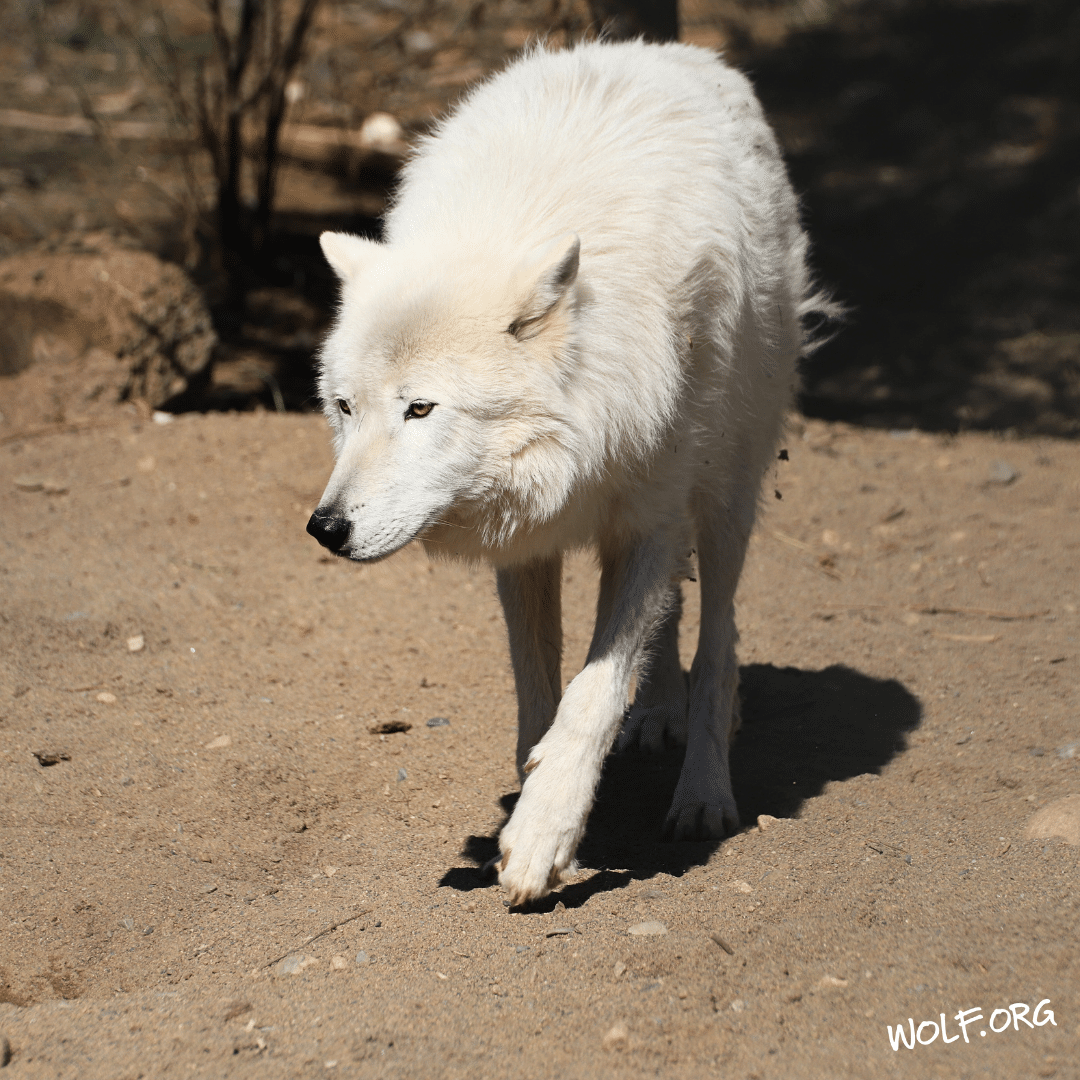
Although wolves are known as social carnivores, they do not hunt only as a pack. During dispersal, when a wolf is alone searching for a new territory, it will hunt alone. Additionally, during the spring and summer, wolves may go off in small groups or alone to hunt for smaller prey or to fish. while the other wolf or wolves in the pack watch the pups at the den or rendezvous site.
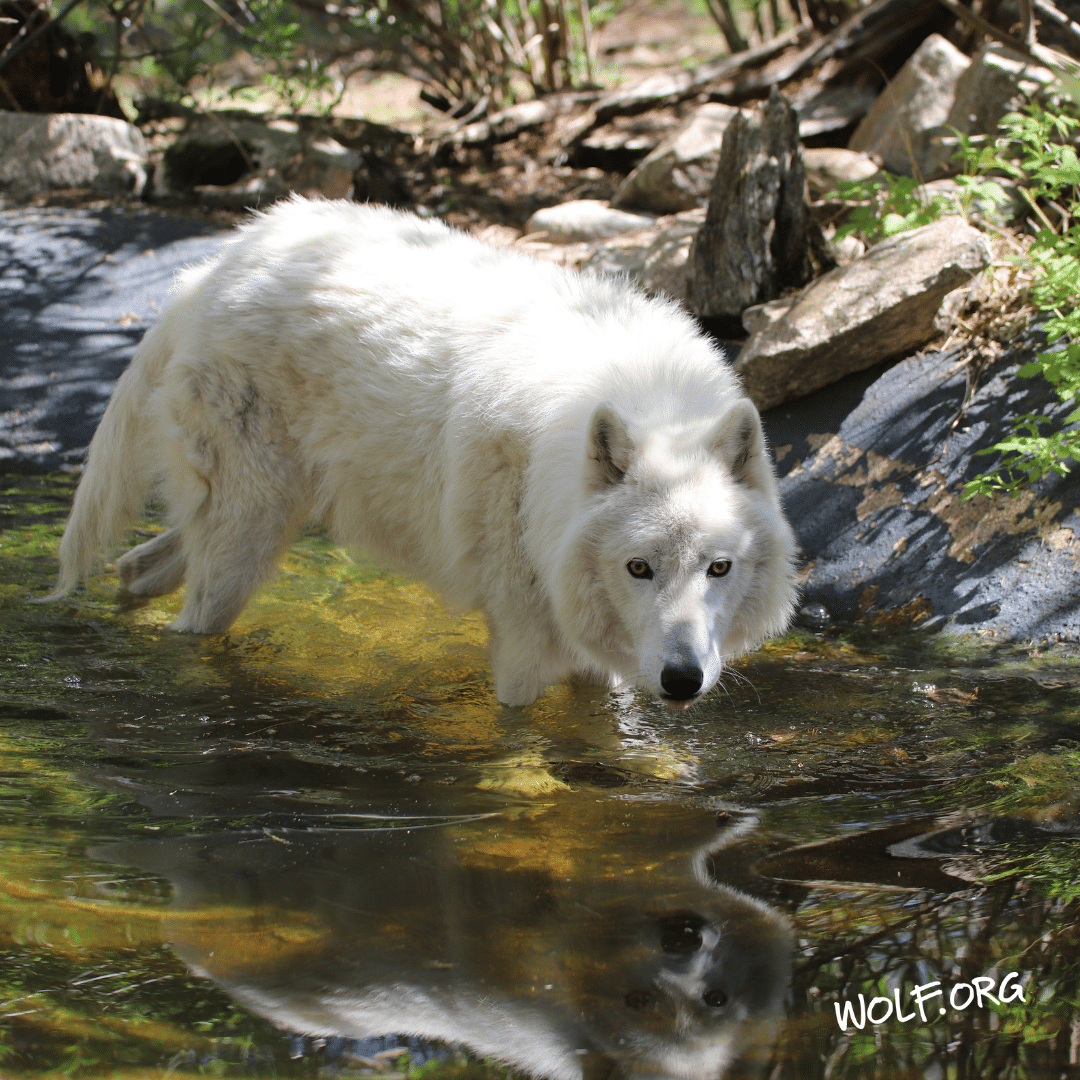
Wolves do swim! The webbed paws which help them walk on top of snow, are also helpful for swimming. Wolves can cool off in a water source when the weather is warmer. Some wolves even hunt fish and other aquatic or even marine animals. Click here to read more: https://canadiangeographic.ca/articles/the-amazing-sea-wolves-of-the-great-bear-rainforest/
A wolf pack will roam and defend a territory of between 25 and 100 miles in the western Great Lakes area. Territories can reach hundreds of square miles where prey densities are in low density such as in northwestern Canada.
Wolves are crepuscular, with higher activity at dawn and dusk. This often follows the patterns of their prey. Wolves are also opportunistic hunters and will take opportunities to hunt when possible. There are times throughout the day and night when wolves rest and times when they hunt. For more information on hunting and feeding behaviors, click here: https://wolf.org/wolf-info/basic-wolf-info/biology-and-behavior/hunting-feeding-behavior/

Wolves hunt only during the night.
Wolves are often labeled as “opportunistic carnivores,” hunting for prey based on opportunity, not a specific method. For example, wolves may prey upon healthy animals that are hindered by deep snow or domestic livestock that are confined or have lost their adaptations for defense.
Wolves howl for defensive and social purposes, not at the moon. They are crepuscular animals, usually more active at dawn or dusk. At night, when the moon is high, their howling is more audible due to the quieter human sounds. A howl can travel 6-7 miles, allowing us to hear them from a greater distance in the quiet of the night.
The activity patterns of wolves vary across seasons, locations, and individuals. Researchers have found that wolf activity patterns can be influenced by temperatures, prey activity and availability, probability of encountering humans, and breeding season. Therefore, there is no single pattern of activity for all wolf populations. For example, a study in Alaska found that wolves were more active in the summer, while a study in Poland found that activity peaks were higher in the winter.

The International Wolf Center uses science-based education to teach and inspire the world about wolves, their ecology, and the wolf-human relationship.