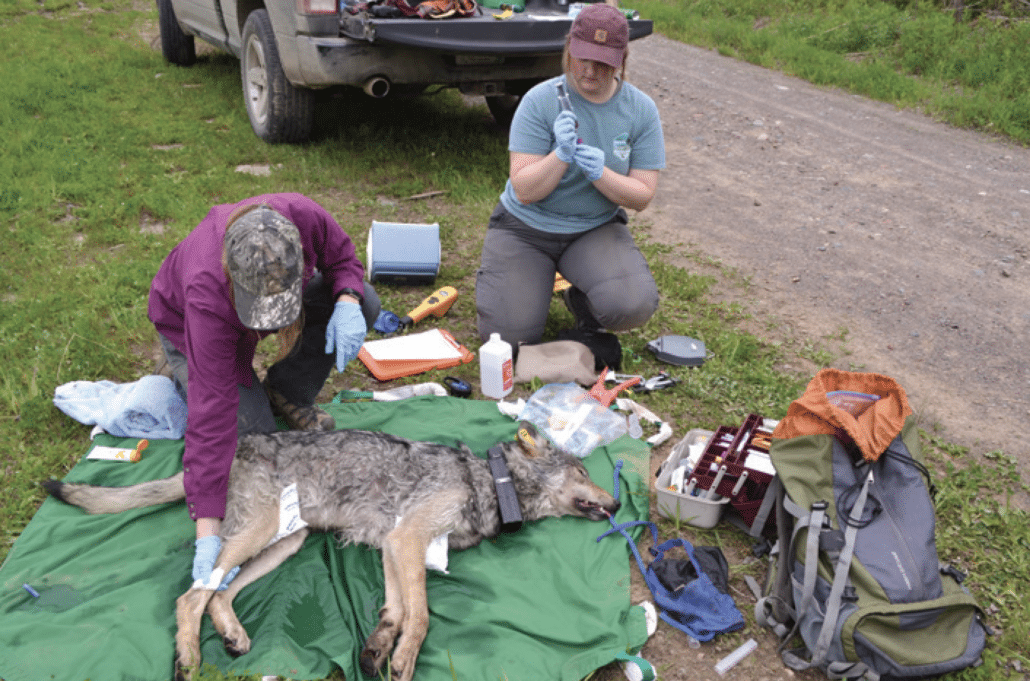
Abby Keller, right, and a colleague perform a field examination of a wolf in Minnesota.
By Abby Keller
While working with wildlife has always been my biggest passion, art was a large part of my life growing up. One of my first seasonal technician jobs was radio-collaring wild gray wolves in the Arrowhead region of northeastern Minnesota for research and population monitoring. During this time, I learned that trapping is its own form of art.
Wolves are incredibly observant, have an excellent sense of smell and are suspicious of anything new. Getting one to step onto a patch of ground smaller than your palm is more challenging than you would think. We used foothold traps with a long chain and a drag on the end. These footholds are modified for live-trapping research animals in the most humane way possible with offset, rubber-padded jaws and an abundance of swivels along the chain to avoid injury. These traps were boiled to decrease foreign smells that would deter a wolf, as well as dyed for camouflage and to prevent rust.
To set a trap, the entire drag, chain and trap are buried in a dirt hole. The chain and drag allow the wolf to run into the dense forest to obtain cover from the elements and any humans; the drag catches on brush and small trees, eventually holding the wolf in place.
We set traps using the environment to our advantage. A large log just off the trail may be a point of interest. A pile of branches may form a natural funnel directing where a wolf puts its paw. A trail intersection may mean an increased chance of a wolf walking by.
Once a spot was chosen, we dug a hole only as big as the trap, saving the dirt on a tarp. We buried the drag and chain first and packed tightly with substrate. We then put the trap on top. I learned quickly to keep my hands out of range of the jaws! We placed wax paper or a small plastic bag over the pan so dirt couldn’t prevent it from depressing. Sifted substrate ensured larger rocks wouldn’t hinder the jaws from closing on the paw.
After burying the trap, we needed to ensure the area blended in. We crumpled dead leaves and grasses and sprinkled them on top to decrease suspicion. We would place a small stick in front of the trap to encourage the wolf to step over it and onto the pan. We used a scent lure placed strategically to attract interest. The process of making a spot look untouched put me in the mind of a wolf.
We checked our traplines at least once a day. If a trap was triggered and missing, we started the task of locating it. The drag left a stream of destruction: broken twigs and upturned leaf litter. If a wolf was at the end of the trail, we injected it with immobilization drugs from a distance using a syringe on the end of a pole. Once the drugs kicked in, we moved the wolf to an open area for a workup.
The most important tasks were completed first. The priority was the wolf’s health, so vital measurements were taken. Then the radio-collar would be fitted, along with ear tags.
Information collected included the wolf’s sex, age (estimated via teeth), weight, blood samples, hair samples and body measurements. We monitored the wolf’s temperature, pulse and respiration. After a 45-minute workup, the wolf was given a drug antagonist (drug to reverse the immobilization) and released. On wobbly paws, the wolf would run into the tree line to rest.
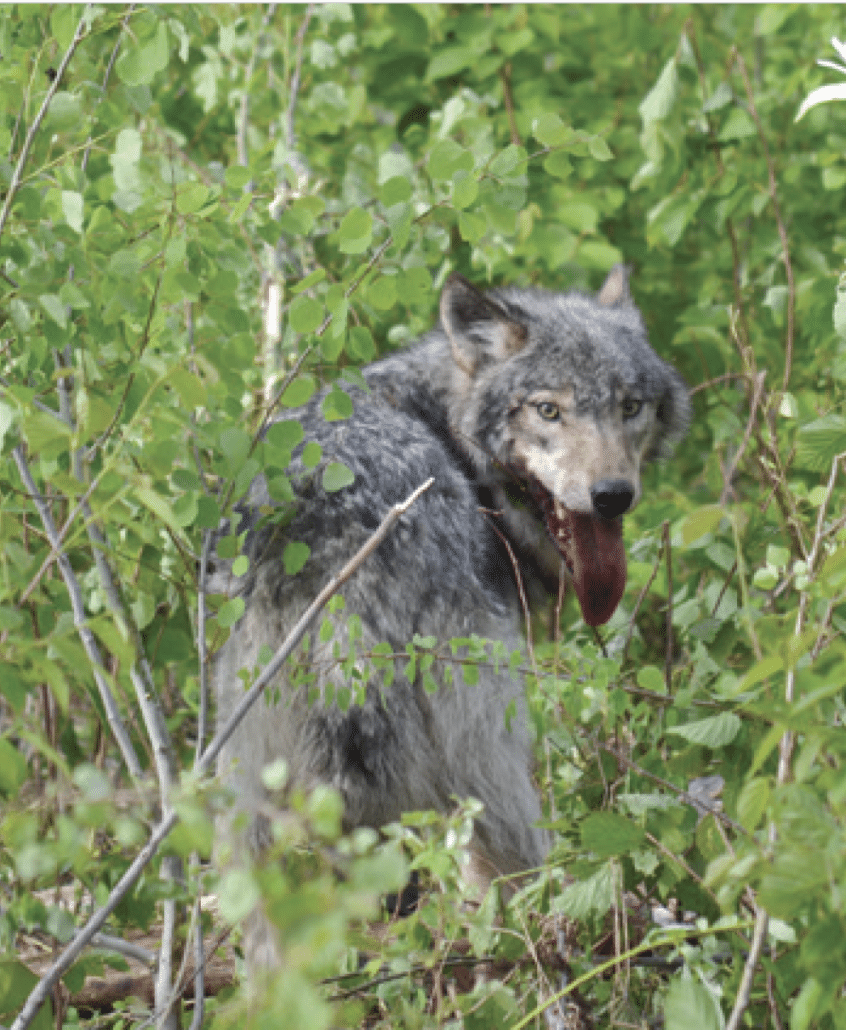
My first capture for this project was a young male wolf. Though an adult, its teeth showed minimal wear, indicating it was likely two to three years old. The landowner near where this capture took place was able to watch our workup of the animal and provide his personal observations.
A light, sandy-colored wolf that he called the blonde wolf was seen several times in the area. He shared several images from his trail cameras with us, confirming that it was part of a pack nearby. This was likely the pack that our collared male was part of before he ultimately dispersed.
We never saw the blonde wolf during my time there, but trail camera images of pups from that pack were later shared, with several of the pups being gray and several being a light blonde color. A year later, this blonde wolf was killed by a vehicle. From this wolf I took a lesson on the elusive nature of wolves: even with the distinctive blonde coloration, there were minimal sightings of both this individual and its light-colored offspring.
My time handling wolves in the Northwoods taught me skills that help me in my current position working with captive wolves. It is where I discovered my passion for working with these clever, complex canines. Wildlife management is a complex field that benefits from creativity, attention to detail and an artistic eye.
Abby Keller is the assistant wolf curator at the International Wolf Center.
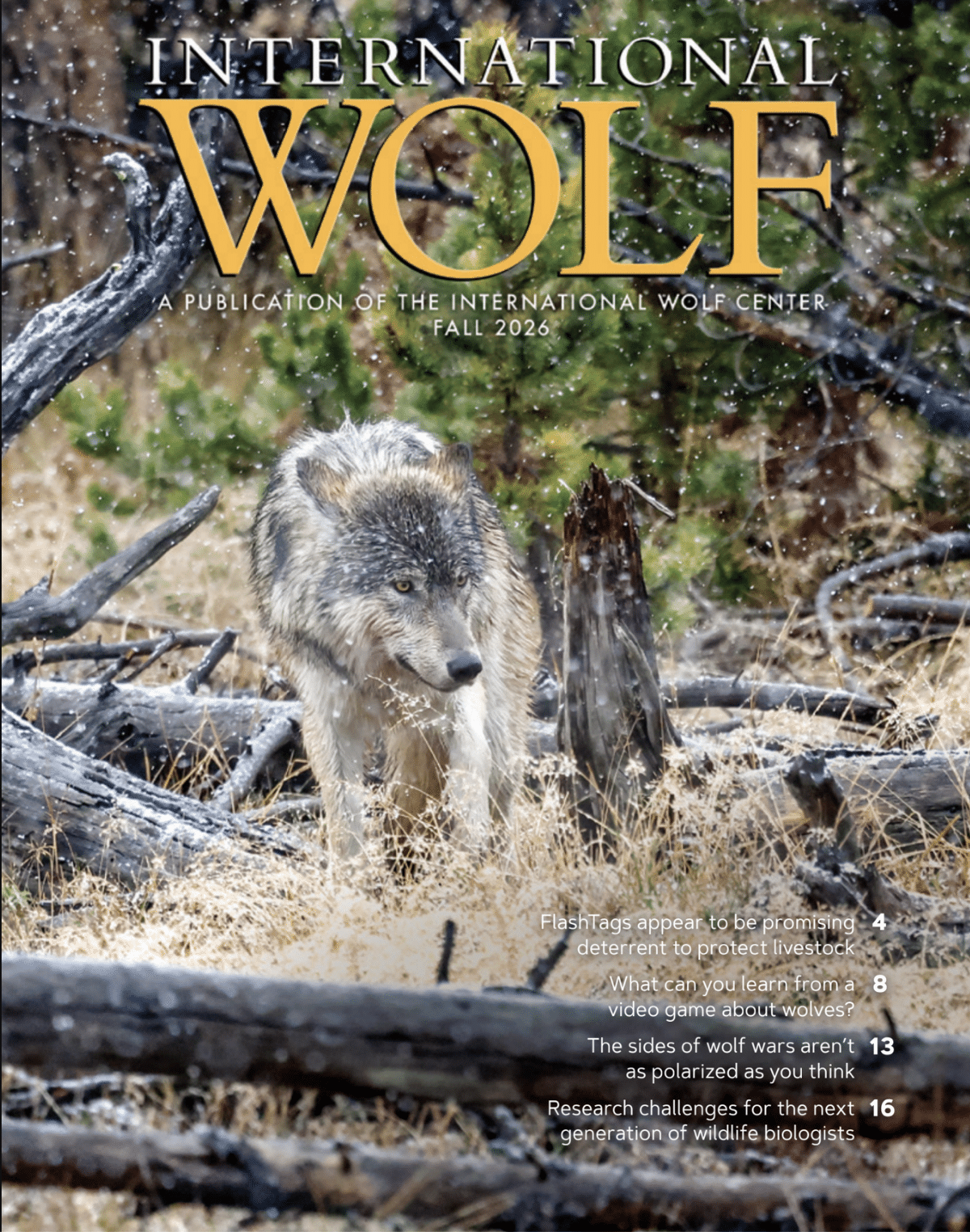
This article was originally published in the Fall 2026 edition of International Wolf magazine, which is published quarterly by the International Wolf Center. The magazine is mailed exclusively to members of the Center.
To learn more about membership, click here.