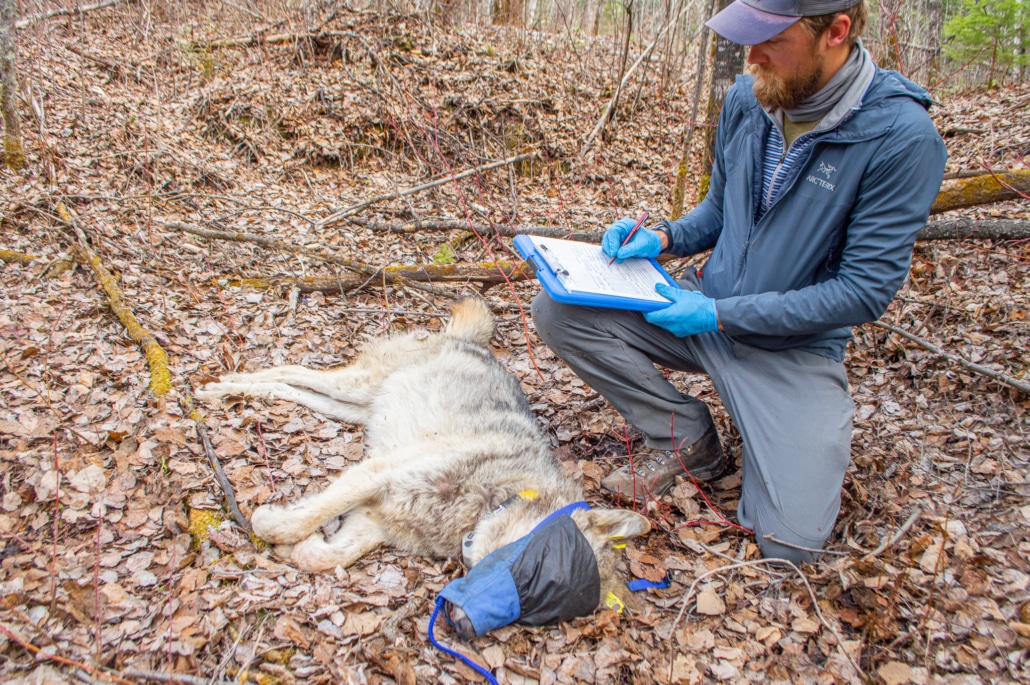
The winter woods of northern Minnesota have grown quieter over the past two years. In the Greater Voyageurs Ecosystem (GVE), a 900-square-mile expanse of rugged boreal forest, frozen lakes and granite ridges, the howl of the gray wolf is being heard less frequently. According to the latest findings from the Voyageurs Wolf Project, the local wolf population has undergone a significant decline. Data from VWP’s 2024–25 population report reveals a 19% decrease in wolf density over the past year and a 31% drop since 2022. The population is currently at its lowest level in 11 years, virtually tied with a previous low recorded in 2020.
While the numbers might seem alarming to the casual observer, researchers say they are witnessing a classic ecological drama: the “ebb and flow” of a predator-prey relationship. The wolves are not disappearing due to disease or human persecution; they are recalibrating to a landscape that suddenly has far fewer deer.
The Trophic Seesaw
To understand why the wolves are declining, one must look at their primary winter food source in the area: white-tailed deer. In the GVE, the deer population was devastated in 2021–22 and 2022–23. Deep snow and prolonged sub-zero temperatures led to a deer die-off exceeding 50%.
“While the numbers might seem alarming to the casual observer, researchers say they are witnessing a classic ecological drama: the ‘ebb and flow’ of a predator-prey relationship.”
“A few years ago, when deer populations were hammered by two back-to-back severe winters, we anticipated that the wolf population would also experience a substantial decline soon,” said Thomas Gable, the lead researcher for the Voyageurs Wolf Project. “As anticipated, this is precisely what has occurred.”
Ironically, the record-breaking mild winters that followed—the winters of 2023–24 and 2024–25—did not help the wolves. While mild winters are good for deer survival, they are difficult for wolves. Without deep snow to impede their prey, wolves struggle to make kills. Deer can move freely and stay healthy, leaving wolves to burn through their own fat reserves.
The result is a wolf population that is literally shrinking to fit its food supply. The researchers have documented this adjustment through two primary mechanisms: the expansion of pack territories and low pup survival rates (about 20% instead of the typical 26 to 30%).
The Spatial Squeeze
One of the most striking findings in the 2024–25 report is how the remaining wolves are using the land. As deer density dropped, wolf packs were forced to hunt over much larger areas to find enough food to sustain themselves.
Two years ago, the average wolf pack territory in the GVE was roughly 37 square miles (96 square kilometers). This past year, that average jumped to 56 square miles (146 square kilometers)—a 54% increase.
“As prey density decreases, wolf packs have to increase their territory size to find enough vulnerable prey,” Gable said. “This is a pattern that has been observed in several places across North America, but seeing it happen so quickly in the GVE is fascinating.”
This geographic expansion has led to what is called a “spatial squeeze.” Because the land can only hold so many large territories, the total number of packs that can coexist in the ecosystem has dropped. In the 2023–24 season, researchers tracked 22 packs. In 2024–25, that number fell to 19.
The report specifically notes the disappearance of the Bluebird Lake, Vermilion River, and Nashata packs. These social units dissolved as their members likely died or dispersed, and their former hunting grounds were absorbed by neighboring packs that were hungry for more space. This expansion inevitably leads to more “pack-on-pack” competition, as neighbors clash over dwindling resources.
A Generation Lost
While territory shifts represent a long-term adjustment, the more immediate and visceral impact of the food shortage is seen in the pups. Recruitment—the number of pups that survive to adulthood—has dwindled to near-record lows.
In a typical year, a wolf litter in the GVE averages about five pups. This past year, the survival rate was just 20%. On average, wolf packs in the study area reared only one pup to adulthood. Across the entire 925-square-mile (2,400-square-kilometer) GVE, only 19 pups survived the year.
The math of wolf survival is brutal. In 2024, approximately 80% of the pups born in the spring died before the winter.
The low survival rates indicate that most packs simply could not acquire enough food to provision their young. In the GVE, wolves are known for their dietary flexibility—they hunt beavers in the summer, forage for blueberries in July, and have even been documented catching freshwater fish. However, these supplemental food sources are often not enough to compensate for a lack of deer during the critical months when pups are growing.
“The low levels of recruitment indicate that most packs in the GVE simply were not able to acquire enough food to provision most of their pups last year,” the project reported. This phenomenon is a typical pattern in the GVE, but it was more pronounced this year than in the previous decade of study.
Monitoring the Change
The Voyageurs Wolf Project is uniquely positioned to document these shifts because of its intensive, high-tech approach to study wolves. The 2024–2025 survey effort was the most intensive in the project’s 11-year history.
To reach their conclusions, Gable and his team deployed 378 trail cameras across the ecosystem. These “remote eyes” captured 1,214 observations of wolf packs, allowing researchers to count individuals and identify which packs had pups.
But cameras only tell part of the story. The project also relies on GPS collars, which transmit a wolf’s location every 20 minutes. These collars allow researchers to map territories with surgical precision. By visiting “clusters” of GPS locations, the team can find kill sites, dens, and rendezvous sites—places where wolves spend time but leave little evidence behind in the dense forest.
“Our ability to document this change is largely due to our large-scale, intensive efforts,” Gable said. “Without these tools, we would not be able to document and understand the changes that are occurring.”
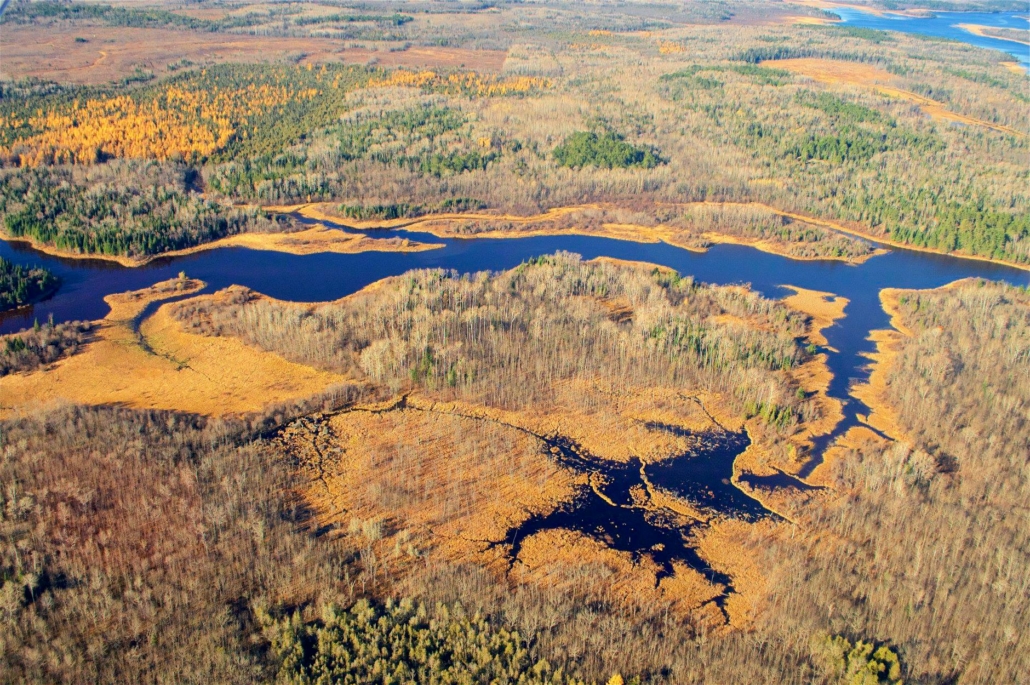
The researchers spend their summers bushwhacking through some of the most difficult terrain in the Lower 48—swamps, beaver flowages, and thick brush—to verify the data sent by the collars. It is painstaking work that has transformed the GVE into one of the most thoroughly understood wolf habitats in the world.
Resilience and the Road Ahead
Despite the recent decline, the Voyageurs Wolf Project emphasizes that the population is not in trouble. The GVE still supports what biologists call a “stable moderate-to-high density” wolf population.
“We do not think this decrease is due to long-term population decline,” the researchers noted in their report. “Rather, we think this recent decrease is simply the natural ebb and flow of the wolf population as it adjusts to changes in deer populations.”
There are already signs that the pendulum is beginning to swing back. Deer populations in the region have increased slightly over the past two years, aided by the mild winters that were so difficult for the wolves. If the deer continue to rebound, the wolves will likely follow suit. Pack territories will shrink back to their previous sizes, and pup survival rates will climb.
This cycle is a reminder of the intricate relationship between predator and prey. Wolves do not exist in a vacuum; they reflect the abundance of the animals they hunt. In the Greater Voyageurs Ecosystem, the wolves are currently “down,” but they are far from out.
For the researchers of the Voyageurs Wolf Project, this period of decline is as scientifically valuable as the years of peak population. It provides a rare look at the mechanisms of population regulation in a wild, unmanaged system.
“Our goal is to understand wolves of the Greater Voyageurs Ecosystem as best as we can,” Gable said. “And fortunately, our efforts have continued to pay off.”
As the project enters its 12th year, the cameras remain strapped to the balsam firs and the GPS units continue to ping from the collars of the GVE’s most elusive residents. The wolves of Voyageurs are waiting for the next shift in the forest’s fortune, and the scientists are there to witness every step of the journey.
 This article was originally published in the Spring 2026 edition of International Wolf magazine, which is published quarterly by the International Wolf Center. The magazine is mailed exclusively to members of the Center.
To learn more about membership, click here.